Vegetable preparation

    Mastering vegetable preparation is crucial for the OCR GCSE Food Preparation and Nutrition exam. This guide delves into the science of enzymatic browning, vitamin retention, and precise knife skills, providing the detailed knowledge examiners expect to see for top marks.

    4
    Min Read
    2
    Examples
    2
    Questions
    6
    Key Terms
    🎙 Podcast Episode
    Vegetable preparation
    0:00-0:00

    Study Notes

    An overview of the key scientific and practical concepts in vegetable preparation.

    Overview

    This study guide covers the essential knowledge for vegetable preparation as required by the OCR J309 specification. Examiners expect candidates to demonstrate a thorough understanding of the functional and chemical properties of vegetables during preparation. This includes the scientific principles of enzymatic browning (oxidation), the impact of preparation techniques on nutritional retention, particularly for water-soluble vitamins B and C, and the physical changes to cell structures that affect texture and sensory profiles. Marks are awarded for precise use of scientific terminology and the ability to link preparation methods to final outcomes. This guide will equip you with the detailed knowledge and practical skills to confidently answer exam questions on this topic.

    Listen to our 10-minute study podcast on Vegetable Preparation.

    Key Scientific Principles

    Enzymatic Browning

    What happens: When a vegetable or fruit is cut, its cell walls are ruptured. This allows an enzyme called polyphenol oxidase to mix with phenolic compounds in the presence of oxygen from the air. This chemical reaction produces brown pigments called melanin, causing the cut surface to turn brown. This process is also known as oxidation.

    Why it matters: For the exam, you must explain this process using the correct scientific terms. Credit is given for identifying the enzyme, the substrate (phenolic compounds), and the role of oxygen. Understanding this allows you to explain how to prevent it, which is a common application question.

    Specific Knowledge: The enzyme is polyphenol oxidase (PPO). The browning is a result of melanin formation. Prevention methods include acidulation, blanching, and exclusion of oxygen.
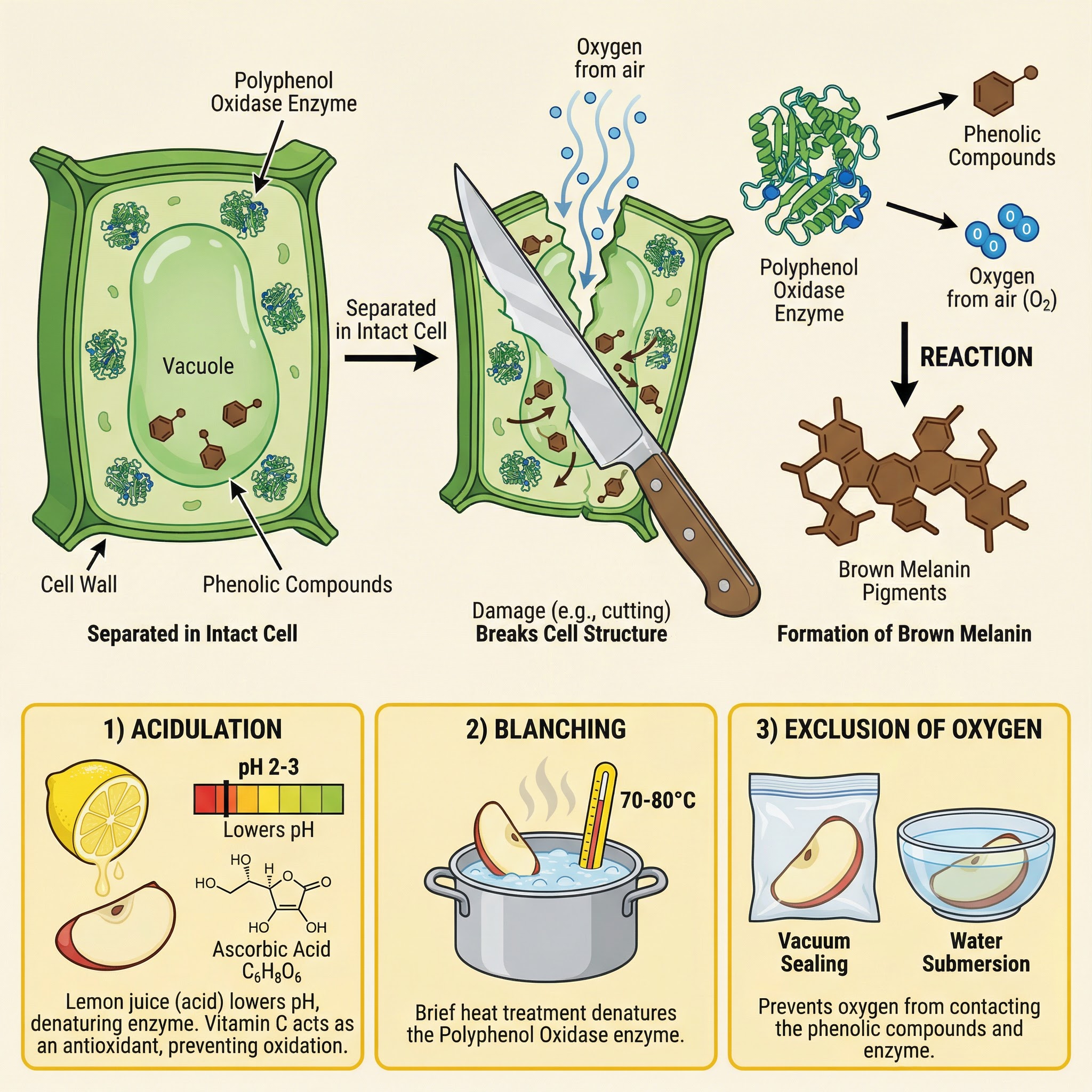
    The science of enzymatic browning and its prevention.

    Nutrient Retention

    What happens: Vegetables are a key source of vitamins, but some are lost during preparation. Water-soluble vitamins, specifically Vitamin C (Ascorbic Acid) and B-group vitamins, are the most vulnerable. They can be lost through leaching (dissolving in water), oxidation (exposure to air), and enzymatic degradation.

    Why it matters: Examiners frequently ask how to maximise nutrient retention. You need to identify the at-risk vitamins and explain the mechanisms of loss and prevention. Marks are awarded for justifying preparation choices based on nutritional outcomes.

    Specific Knowledge: Know the difference between water-soluble (B, C) and fat-soluble (A, D, E, K) vitamins. Be able to explain leaching, oxidation, and strategies like minimal water use, preparing just before use, and using acidic mediums.
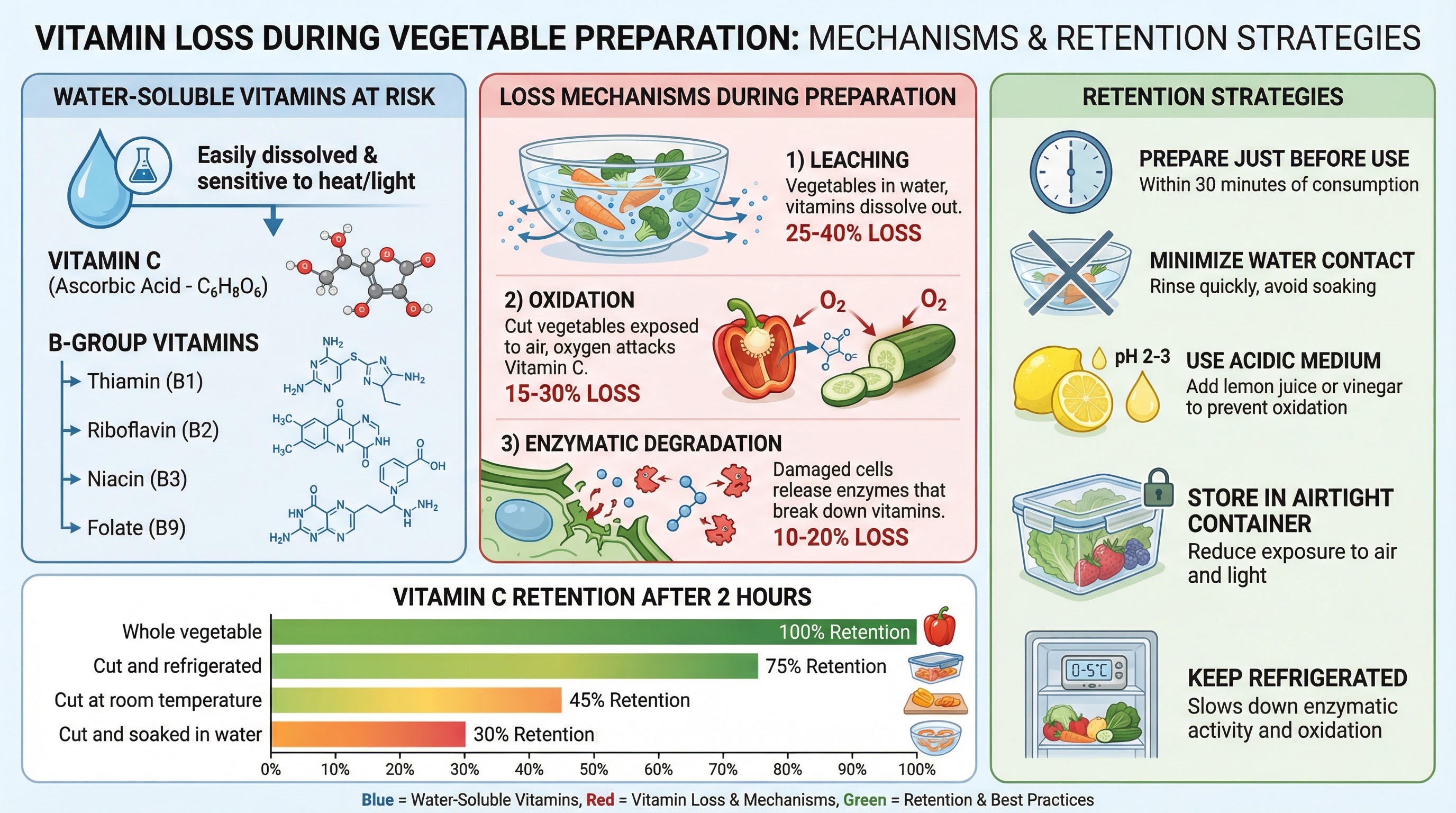
    How to maximise vitamin retention during vegetable preparation.

    Professional Preparation Techniques

    Knife Skills & Safety

    What it is: Using standard, precise knife cuts not only ensures even cooking but also demonstrates a high level of skill (AO3). Key cuts include julienne, brunoise, chiffonade, macedoine, and paysanne. Safety is paramount, and you must know the bridge hold and claw grip.

    Why it matters: Vague descriptions like 'chopping small' will not earn marks. You must use the correct terminology and, where possible, the standard dimensions for each cut. This demonstrates technical proficiency.

    Specific Knowledge: Be able to name and describe at least four different classical knife cuts and the two main safety grips.
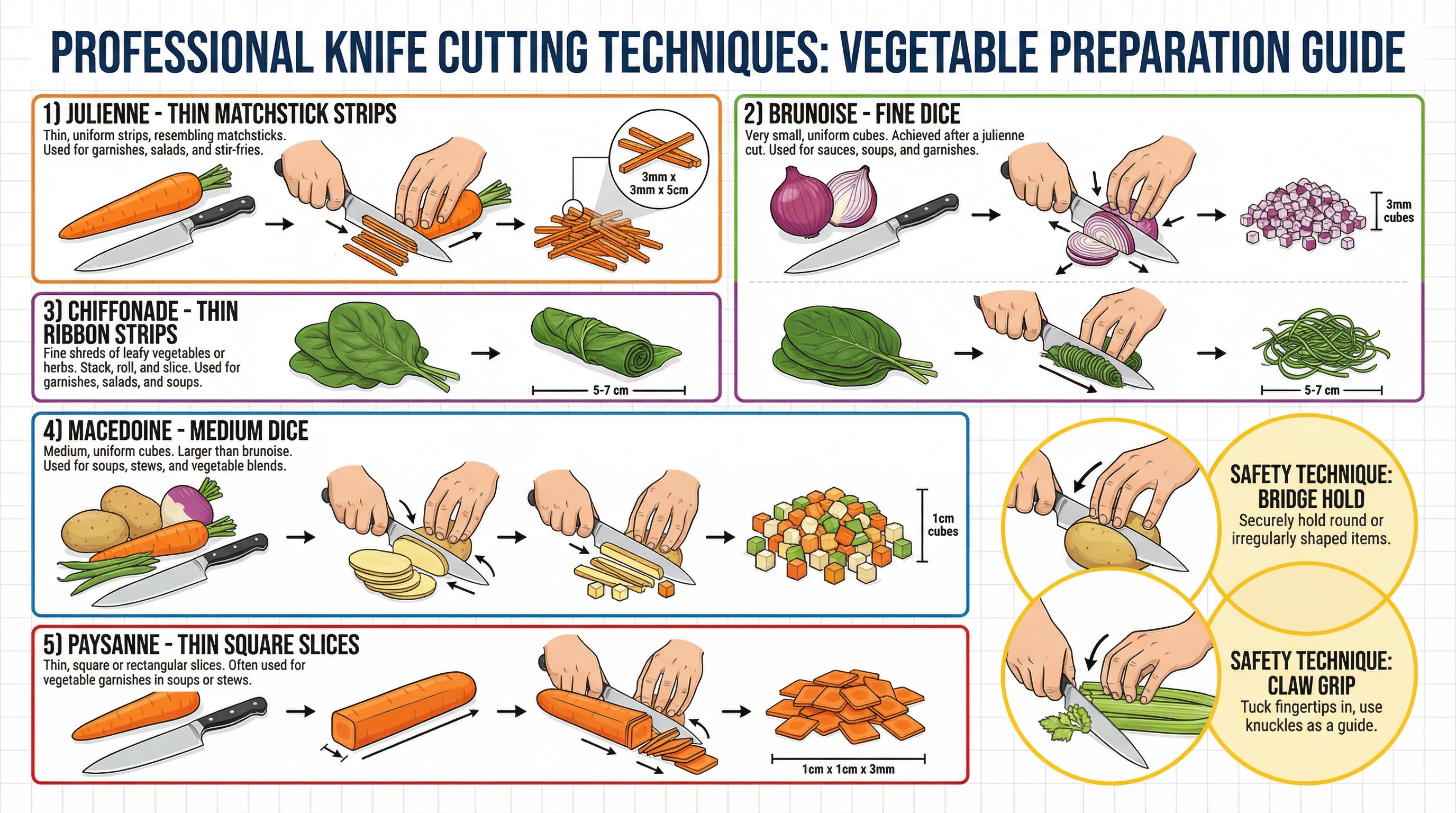
    Mastering professional knife cuts and safety techniques.

    Visual Resources

    3 diagrams and illustrations

    The science of enzymatic browning and its prevention.
    The science of enzymatic browning and its prevention.
    Mastering professional knife cuts and safety techniques.
    Mastering professional knife cuts and safety techniques.
    How to maximise vitamin retention during vegetable preparation.
    How to maximise vitamin retention during vegetable preparation.

    Worked Examples

    2 detailed examples with solutions and examiner commentary

    Practice Questions

    Test your understanding — click to reveal model answers

    Q1

    Describe two different knife cuts a chef would use when preparing vegetables. (4 marks)

    4 marks
    standard

    Hint: Name the cut and then describe its shape and a typical use.

    Q2

    Explain two reasons why a chef might blanch vegetables before using them in a stir-fry. (4 marks)

    4 marks
    standard

    Hint: Think about enzymes and colour.

    Key Terms

    Essential vocabulary to know

    More Food Preparation and Nutrition Study Guides

    View all

    Food additives

    OCR
    GCSE

    This guide delves into the science of food additives, a critical component of the OCR GCSE Food Preparation and Nutrition exam. It explores how substances like preservatives and emulsifiers work, why they are essential for modern food production, and how to critically evaluate their use, ensuring you can secure maximum marks.

    Safe food handling practices

    OCR
    GCSE

    Mastering safe food handling is non-negotiable for a high grade in OCR GCSE Food Preparation and Nutrition. This guide moves beyond basic hygiene, delving into the microbiological principles and precise temperature controls that examiners reward. Understanding this science is the key to unlocking top-level marks and ensuring food is safe.

    Dietary Reference Values (DRVs)

    OCR
    GCSE

    Master Dietary Reference Values (DRVs) for your OCR GCSE Food Preparation and Nutrition exam. This guide breaks down the science of nutritional requirements, showing you how to apply DRV knowledge to different life stages and analyse diets like a pro to secure top marks.

    Pastry making

    OCR
    GCSE

    Pastry making is a cornerstone of the OCR GCSE Food Preparation and Nutrition specification, testing candidates' scientific understanding of ingredient functionality, chemical processes, and practical technique. Examiners award marks for precise knowledge of fat-to-flour ratios, accurate explanation of shortening and plasticity, and the ability to link functional properties to sensory outcomes. Mastering this topic demonstrates your grasp of food science principles that underpin professional culinary practice.

    Ethical considerations and Fair Trade

    OCR
    GCSE

    This study guide delves into the critical topic of ethical considerations and Fair Trade in food production, a key area of the OCR GCSE Food Preparation and Nutrition specification. It provides a detailed examination of how consumer choices impact global food supply chains, animal welfare, and the livelihoods of producers in Low Income Countries (LICs), equipping students with the analytical skills needed to excel in their exams."

    Diet-related health issues

    OCR
    GCSE

    This study guide provides a comprehensive, exam-focused overview of diet-related health issues for OCR GCSE Food Preparation and Nutrition. It decodes the science behind conditions like CHD and Type 2 Diabetes, equipping students with the precise knowledge and terminology required to achieve top marks.